family adventures, Hawaii, hiking, history, Review, travel

Hiking Diamond Head Crater in Oʻahu: What to Know Before You Go

Hiking Diamond Head Crater was high on our list for our trip to Oʻahu and even though we didn’t plan ahead as much as we should have, it still turned out to be one of our favorite experiences.

We ended up booking a later reservation time since earlier slots were already taken. I wasn’t sure how hiking later in the day would go, but honestly it worked out beautifully.

First Impressions: Expect Crowds

Every review we read mentioned crowds… and they weren’t wrong.

Even later in the day, the trail was still very busy. But don’t let that discourage you, this hike is popular for a reason, and the flow of people tends to keep moving.

Once we parked and got started, the trail began with a gradual incline. It feels easy at first, almost deceptively so.

The Climb: What It’s Really Like

As you continue upward, the trail starts to pick up. There are sections with metal railings for support, which can be helpful depending on your comfort level.

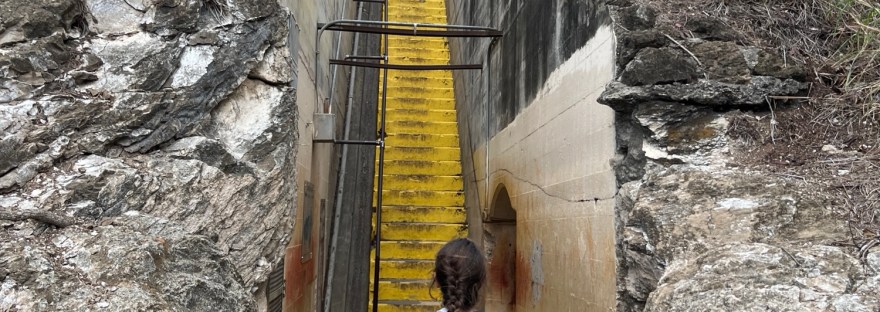
Then comes the first set of stairs.

After climbing those, you pass through a tunnel (which was such a fun surprise), and that’s where you’ll face a choice:

  • Go right → steeper, more direct route
  • Go left → longer, more gradual incline

We chose the steeper route and I’m so glad we did.

It was definitely more intense, but it made the rest of the hike feel easier. Plus, I wouldn’t have wanted to descend those steep stairs later on.

From there, you’ll climb more stairs, pass through another tunnel, and wind your way up into a historic bunker.

The hardest part? Climbing up and out of that bunker.

But once you do… the reward is incredible.

The View: Worth Every Step

At the top, you’re greeted with sweeping views of the bright blue Pacific Ocean and the coastline of Oʻahu.

It is crowded at the summit, and space is limited, so you may need to be patient. But even with the crowds, we were able to pause, catch our breath, and take it all in.

We continued up to an even higher platform, where the views got even better. From there, you can even spot Koko Head in the distance.

And on our way down? We were treated to a beautiful rainbow, something we saw almost daily on the island. Now I completely understand why Hawaii is called the Rainbow State.

Heading down was much easier. It was fun to look back and see just how far we had climbed and to cheer on other hikers making their way up.

Despite the crowds, everything felt manageable, and the trail was well marked and easy to follow.

History of Diamond Head

Diamond Head Crater, known in Hawaiian as Lēʻahi, is a volcanic crater and one of the most recognizable landmarks on Oʻahu.

In the early 1900s, the U.S. military used the crater as a strategic lookout point to defend the island. Many of the tunnels, staircases, and bunkers you hike through today were built during that time adding a unique historical element to the hike.

Parking & Reservations

  • Reservations required: All visitors (including out of state guests) must book a timed entry in advance
  • Parking: Limited parking is available inside the crater
  • Parking fee: Typically around $10 per vehicle (subject to change)
  • Entry fee: Per person fee for non-residents
  • Hours: Usually open from 6:00 AM – 6:00 PM (last entry around 4:00 PM)

💡 Tip: If you don’t get an early reservation, don’t stress…late afternoon can still be a great time to go!

Hiking Facts

  • Distance: ~1.6 miles round trip
  • Elevation gain: ~560 feet
  • Difficulty: Moderate
  • Trail type: Out and back
  • Time to complete: 1.5–2 hours (depending on pace and crowds)

Tips for Hiking Diamond Head

  • Go early or later in the day to avoid peak heat
  • Bring water…there’s very little shade
  • Wear good shoes (stairs + uneven terrain)
  • Be prepared for crowds and narrow sections
  • Take your time on the stairs…they can be steep
  • Don’t skip the bunkers…they’re part of the experience
  • Keep an eye out for rainbows 🌈

I’m so thankful we were able to fit this hike into our trip. Between the history, the views, and the experience of climbing through tunnels and bunkers, it’s truly one of those “only in Hawaiʻi” adventures.

Even with the crowds, it was absolutely worth it!

Planning your trip to Hawaii? Don’t miss our other Oʻahu adventures, including hikes, beaches, and family friendly travel tips to help you make the most of your time on the island ✨

Hawaii, history, travel

No Mountain Too High: A Hawaiian Reminder of Perseverance

“‘Aʻohe puʻu kiʻekiʻe ke hoʻāʻo ʻia e piʻi.”

This beautiful Hawaiian proverb reminds us that no hill is too high when you are willing to climb it.

Standing on the islands, surrounded by dramatic cliffs, lush valleys, and volcanic peaks, it’s easy to see how this wisdom was born. Every mountain looks intimidating from the bottom. The path isn’t always clear, and sometimes the climb feels slow and exhausting.

But step by step, the summit gets closer.

This proverb isn’t just about physical mountains. It speaks to the challenges we face in everyday life, raising families, pursuing dreams, healing from hard seasons, or trusting God in uncertain moments.

What once looked impossible becomes reachable when we keep moving forward.

For our family, adventure has taught us this truth again and again. The hardest hikes often lead to the most breathtaking views. The same is true in life: perseverance reveals beauty we would never see if we stopped at the base of the mountain.

So wherever you are today, remember this Hawaiian wisdom:

No mountain is too high when you’re willing to take the next step.

Check out a few of the beautiful hikes we did in Oahu where this was a great reminder ✨

Hawaii, hiking, history, Review, travel

Hiking the Lanikai Pillbox Trail with Kids: What to Expect + Tips

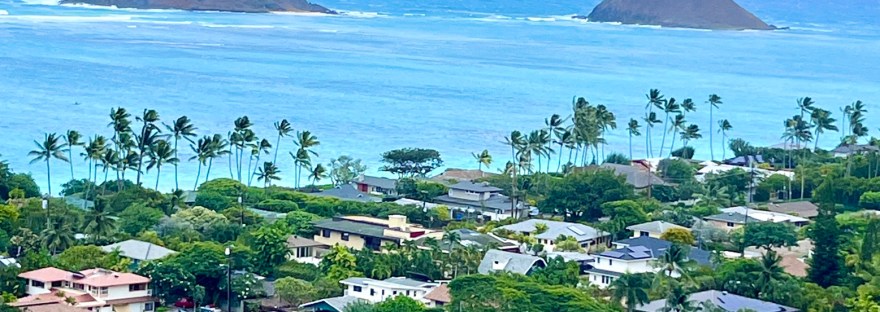
The views! Known as the “Mokes”

Our very first hike on Oʻahu was the Ka’iwa Ridge Trail (also known as the Lanikai Pillbox Hike) and we were so excited to finally see what the famous pillboxes were all about.

Before we even started, though, we were met with something that made us almost rethink doing this hike …a warning sign at the trailhead explaining that hikers have needed rescue here. We decided that we would just try it and if it was to difficult we would turn back.We assumed the warning was because the trail was short and steep,so we didn’t fully grasp or understand what the sign meant at the time .

The warning

Looking back… the rope at the beginning should have been our first clue.

The rope to help you as you climb

What the Trail Is Really Like

Right from the start, the incline is no joke. It’s steep, dusty, and requires a bit of grabbing the rope to pull yourself up which was especially helpful for little ones. That rope at the beginning? Definitely not just for decoration.

As we climbed higher, we quickly realized something we hadn’t fully expected… this trail is truly a ridge. At times, you are walking along a narrow path with drop-offs on both sides. For those of us who aren’t the biggest fans of heights, this added a whole new level of challenge.

But the views!! They completely stopped us in our tracks.

From the ridge, you can see the turquoise waters of Lanikai Beach and the iconic Mokulua Islands (often called “the Mokes”) rising out of the ocean. It felt like we could see for miles each direction . It was breathtaking, humbling, and absolutely worth every hard step.

Reaching the Pillboxes

We took our time climbing, encouraging one another as we went, until we reached a flatter section…a small plateau. From there, we had our first glimpse of the first pillbox .

It was such an exciting moment when we reached the pillbox! Standing there, seeing people on top of it, taking in the views…it felt like such a reward. The steep drop offs are crazy around it so our family chose to stay on one side and not climb on top, even though others were.It was still an unbelievable experience just standing next to it!

From that first pillbox, you can also spot the second one just a short distance away…about 100 yards further along the ridge.

The Descent (The Real Challenge)

If the climb up tested our endurance, the way down tested our balance.

The trail is dry and dusty, and the dirt can be very slippery , especially on the steep sections. It almost feels like your feet want to slide out from under you, which made this part especially tricky for our little ones.

We slowed way down, took careful steps, and helped each other navigate every section safely.

The People Made It Even Better

One of the sweetest parts of this hike was the community on the trail.

Strangers cheering each other on, both going up and coming down, created such an encouraging atmosphere. There’s something special about shared challenge and shared beauty that brings people together.

History of the Pillboxes

One of the reasons we really wanted to do this hike was the history behind it.

The pillboxes you see along the trail were built during World War II as military observation stations. Their purpose was to help spot incoming ships or aircraft and protect the island from potential attacks.

Today, they stand as historical reminders of that time, while also offering some of the most scenic viewpoints on Oʻahu.

Parking & Trailhead Info

  • Location: The trailhead is located in the Lanikai neighborhood in Kailua
  • Parking:
    • Street parking is available along residential roads near the trailhead
    • There is a Golf Course parking area that is monitored where you can pay for parking ( We did this and made it easier for parking and safety)
    • Be mindful of posted signs and respect the neighborhood (no blocking driveways)
    • Arrive early…parking fills up quickly
  • Distance: ~1.6 miles round trip ( it took us just over an hour round trip )
  • Elevation Gain: ~500–600 feet
  • Trail Type: Out and back
  • Best Time to Go: Sunrise , Sunset or early morning (less heat, fewer crowds)

Final Thoughts

By the time we made it back down, we were tired, dusty, and so thankful that we did it .

For a relatively short hike, this one truly challenged us, but the views? Absolutely priceless.

Would we do it again?

Without hesitation…yes!!!!

Check out our reel of our hike ⬇️

Check out our other hikes and must see in Oahu ⬇️

Gathered thoughts, Hawaii, travel

Beyond the Scenery: The True Beauty of Hawaiʻi’s People
Nani ke kanaka a me ka naʻau 🌺
Beautiful is the person and the heart.
⠀⠀⠀⠀⠀⠀⠀⠀⠀
Hawaiʻi is filled with breathtaking views, but what stood out to us most was the beauty of the people ,the kindness, the warmth, and the spirit of aloha.
⠀⠀⠀⠀⠀⠀⠀⠀

If you really want to experience the beauty of Hawaiʻi, take the time to slow down and connect. Talk with the people. Listen to their stories. Let them talk story..which is sharing pieces of their life, their island, their history.So much rich detail in these moments . That’s where the real beauty lives✨

Not just in the landscapes…but in the voices, the laughter, and the hearts of the people who call these islands home.

A sweet reminder that true beauty isn’t just what we see… it’s how we love. 💛

Check out our other post ⬇️


⠀⠀⠀⠀⠀⠀⠀⠀⠀

faith, family adventures, Hawaii, Review, travel

The Moana Surfrider: First Lady of Waikiki

We were drawn to the Moana Surfrider Hotel, not just for its stunning oceanfront location on Waikiki Beach , but for the history it holds and to step into a piece of history that has stood for over a century .One that has welcomed travelers long before Waikiki became what it is today.

For our family, it was the perfect combination of everything we love: history to learn from, beauty to take in, and a location that simply can’t be matched.

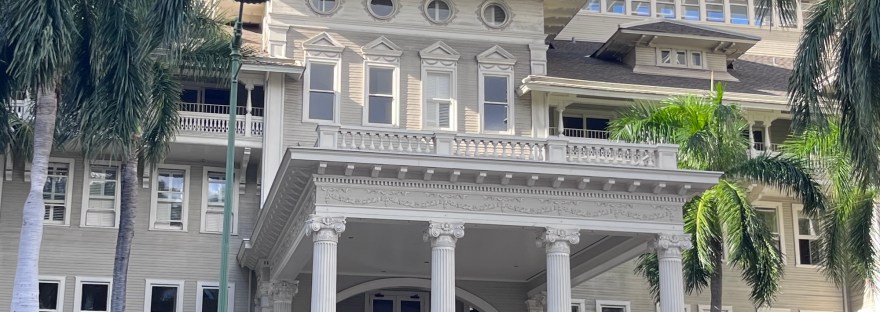
The Moana Surfrider Hotel is one of the very first hotels built in Waikiki, Oahu and because of that, it holds an incredibly special place in Hawaiian history. Opened in 1901, it is often referred to as the “First Lady of Waikiki.” Long before high-rise resorts lined the shoreline, the Moana stood as a grand beacon of luxury on what was once a quiet stretch of beach.

It is absolutely beautiful and sits directly on Waikiki Beach, blending Victorian elegance with the relaxed rhythm of island life.

When we walked in, we immediately felt like we had stepped back in time. The wide open lobby, high ceilings, and sweeping staircase reflect the hotel’s original Victorian architectural style, which was quite a statement in the early 1900s. At the time it was built, arriving guests would travel by ship and horse-drawn carriage . Can you imagine stepping off a boat and into this grand oceanfront retreat?

As we walked through the lobby and out the back doors, we were greeted by a spacious veranda lined with rocking chairs … one of my favorite details. Sitting there with coffee in hand felt like slowing down time and savoring it in the best way.

The famous Banyan tree is front and center welcoming all to the natural beauty of the Island . Planted in 1904, just a few years after the hotel opened, the Banyan tree has grown into a massive, breathtaking centerpiece of the courtyard. Its branches stretch wide and welcoming, creating shade and a gathering place for generations of visitors. It’s incredible to think how many stories that tree has witnessed over more than a century.We felt so privileged to be able to stand there where so many others had gathered before.

The outside pool is beautiful …you can swim while looking out at the Pacific Ocean, or simply walk a few steps and be right on Waikiki Beach itself. That seamless connection between historic elegance and oceanfront beauty is part of what makes this place so special.

The hotel reminded me of a beautiful old-style mansion , the kind filled with stories. Oh if the walls could talk! Over the decades it has hosted celebrities, dignitaries, and travelers from around the world. Even through renovations and modernization, the Moana Surfrider has intentionally preserved its historic charm.

Staying here (or even just visiting) isn’t just about enjoying a beautiful resort , it’s about stepping into a piece of Hawaiian history.

But the story doesn’t stop at the hotel itself ✨

Waikiki: From Royal Retreat to World Destination

Long before Waikiki became a world-famous travel destination, it was actually a retreat for Hawaiian royalty. The area was once filled with wetlands and fishponds, and Hawaiian aliʻi (chiefs and royalty) would come here to relax and surf.

In the late 1800s and early 1900s, Waikiki began transforming as tourism grew. When the Moana Surfrider opened in 1901, it became the very first large hotel in the area, setting the stage for Waikiki’s future. At that time, there were no high-rise hotels, no bustling Kalakaua Avenue , just ocean, palm trees, and this grand white hotel standing proudly along the shore.

Over the years, Waikiki evolved into the vibrant destination we know today. But the Moana Surfrider still stands as a reminder of the beginning …a place where history hasn’t been forgotten.It is also listed on the National Register of Historic Places.

One of the things I love most about staying somewhere historic is the opportunity to turn it into a living history lesson.

📚 A Living History Lesson Here are a few simple ways to make this educational:

History

Research Hawaii’s transition from a monarchy to a U.S. territory (1898) and then to statehood (1959).

Study Hawaiian royalty and learn about Queen Liliʻuokalani.

Compare what travel looked like in 1901 vs. today.

Geography

Locate Oahu on a map and identify other Hawaiian islands. Study volcanic island formation.

Architecture

Look up Victorian architectural elements and identify them in the hotel design.

Writing Prompt for Kids

“Imagine you are arriving at the Moana Surfrider in 1901. Write a journal entry about your first impressions.”

If you find yourself in Waikiki, don’t just admire the beach , step inside the Moana Surfrider. Sit under the Banyan tree. Imagine the year 1901.

Travel becomes unforgettable when it connects beauty with learning.

The Moana Surfrider is so much more than just a beautiful place to stay. It’s steeped in rich history✨

The same God who was writing stories here over a hundred years ago is still writing them today , even in our own family’s journey.

That’s what I’ll carry with me most from this visit … not just the ocean views or the historic charm, but the reminder that God is present in every season… past and present.

And when we choose to travel with intention, to learn, to reflect, and to be present , those moments become more than memories.They become part of the story we’re living, too.

Check out our reel of this beautiful Hotel ⬇️ and be sure to subscribe 🩷

And check out more of our post on Hawaii ⬇️